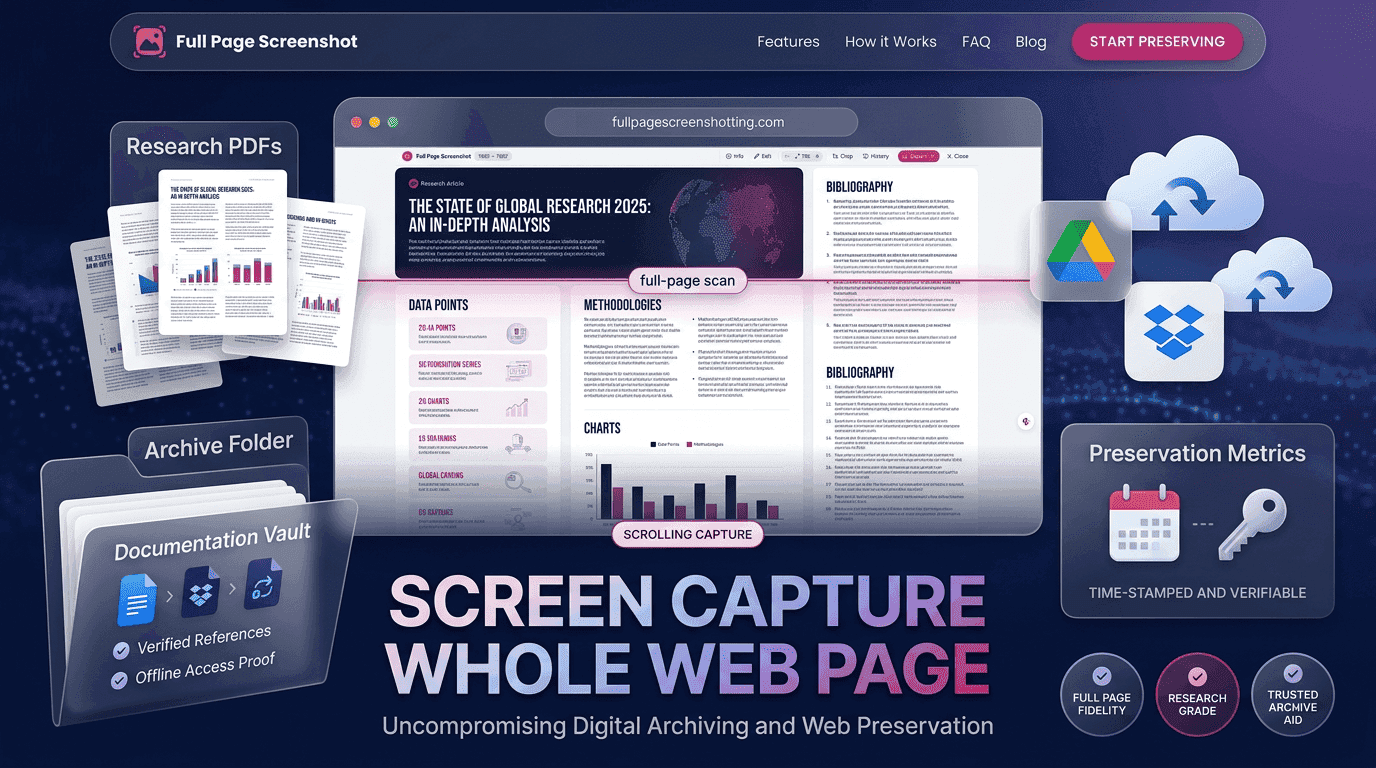
The internet has become one of the world’s largest sources of information. Researchers, educators, businesses, journalists, and government organizations rely on online content every day to gather data, verify facts, and support decision-making. However, unlike printed materials, digital content is constantly changing. Articles are updated, webpages are redesigned, data is removed, and sometimes entire websites disappear without notice.
This is why preserving online information has become increasingly important. Using Screen capture whole web page technology allows organizations and individuals to create complete visual records of webpages before changes occur. Rather than relying on partial screenshots or saved links, users can preserve the entire webpage exactly as it appeared at a specific moment in time.
At FullPage Screen Shotting, we understand that accurate archiving is about more than storing information. It is about preserving context, maintaining credibility, and ensuring valuable digital content remains accessible for future reference.
Why Researchers Need Permanent Webpage Records
Research depends on reliable sources. Whether conducting academic studies, market analysis, policy evaluations, or business research, professionals need access to information that can be verified and referenced long after it was originally published.
One of the biggest challenges researchers face is the temporary nature of online content. Unlike books or printed journals, webpages can change without warning. A report published today may be updated next month, and important data could be removed entirely.
Using Screen capture whole web page methods also helps maintain context. A webpage contains more than just text. Layout, visuals, navigation elements, and supporting content often contribute to the meaning of the information being presented.
Preserving Online Publications Before Content Changes
Online publications are frequently updated to improve accuracy, reflect new information, or align with changing editorial standards. While updates can be beneficial, they may also create challenges for researchers and organizations that need access to original content.
For example, a news article covering a major event may undergo multiple revisions as new information becomes available. A market report might be updated with revised statistics. Corporate announcements can change as business conditions evolve.
Without proper archiving, earlier versions of these publications may be lost. This can make it difficult to verify facts, track information changes, or understand how a story developed over time.
Using Screen capture whole web page technology enables users to maintain accurate archives without relying solely on external websites. This approach reduces the risk of losing valuable information and supports more dependable research practices.
Creating Reliable Sources for Academic References
Academic research requires credible and verifiable references. Universities, research institutions, and students often use online resources to support their findings. However, citing webpages presents unique challenges because digital content can change after it has been referenced.
When a webpage is updated or removed, future readers may be unable to verify the original source. This can weaken the reliability of research and create difficulties during peer review processes.
Complete webpage archives help address this issue by preserving the source exactly as it appeared when cited. Researchers can maintain a visual record that supports transparency and improves the credibility of their work.
As digital sources become increasingly common in academic work, comprehensive webpage preservation has become an important tool for maintaining research integrity.
Supporting Compliance and Regulatory Documentation
Many industries operate under strict compliance and regulatory requirements. Organizations may need to document website content to demonstrate adherence to laws, regulations, or industry standards.
Examples include privacy policies, financial disclosures, healthcare information, product claims, and legal notices. These materials often need to be preserved as evidence of what was publicly available at a specific point in time.
A simple link to a webpage may not provide sufficient documentation because the content can be modified later. Complete webpage records offer a more reliable alternative by preserving the entire page exactly as it appeared.
Maintaining Historical Records of Digital Content
Digital content represents an important part of modern history. Government announcements, news reports, educational resources, corporate communications, and cultural discussions increasingly take place online.
Without proper preservation, significant information may disappear over time. Websites close, pages are removed, and content is replaced with newer versions. As a result, valuable historical context can be lost.
Using Screen capture whole web page technology creates comprehensive records that capture not only the content itself but also the surrounding context that gives it meaning.
Strengthening Knowledge Management Systems
Knowledge management involves collecting, organizing, and preserving information so it can be used effectively in the future. Many organizations rely on digital resources as part of their knowledge management strategies.
However, online information is often scattered across multiple websites and platforms. If these resources change or disappear, organizations may lose access to important knowledge.
Comprehensive webpage archiving helps address this challenge by creating permanent records that can be stored within internal knowledge management systems. Teams gain reliable access to information without depending on external websites.
This approach supports employee training, research initiatives, strategic planning, and operational decision-making. It also ensures that important digital resources remain available even if their original sources become inaccessible.
Organizing Archived Screenshots for Easy Retrieval
Creating webpage archives is only part of the process. To maximize their value, records must be organized in a way that allows users to retrieve information quickly and efficiently.
Effective archive management begins with consistent file naming conventions. Including dates, project names, categories, and version numbers can significantly improve searchability.
Using Screen capture whole web page documentation as part of a structured archive strategy improves accessibility and ensures that important information remains useful over the long term.
Protecting Critical Information From Website Updates
Website updates are a normal part of digital publishing. Businesses revise content, researchers update findings, and organizations adjust messaging to reflect changing circumstances.
While these updates often improve accuracy and relevance, they can also remove information that may still be valuable for historical, legal, or research purposes.
Protecting critical information requires a proactive approach. Waiting until content changes may mean losing access to important details forever.
By capturing complete webpages before updates occur, organizations create reliable records that preserve original content and context. These archives provide a safeguard against information loss and support long-term documentation goals.
Whether preserving research sources, compliance records, or business intelligence, comprehensive webpage archiving helps ensure that important information remains available when it is needed most.
Conclusion
Online content changes constantly, making digital preservation more important than ever. Researchers, educators, businesses, and compliance professionals all face challenges when valuable information is updated, removed, or replaced.
Using Screen capture whole web page technology provides a practical solution by preserving complete webpages exactly as they appear at a specific point in time. These records support academic research, regulatory compliance, knowledge management, historical archiving, and long-term information preservation.
At FullPage Screen Shotting, we believe accurate digital archiving is essential for maintaining credibility, protecting information, and supporting informed decision-making. Organizations that invest in comprehensive webpage preservation gain reliable access to important content even as the digital landscape continues to evolve.
In a world where online information can change in an instant, preserving complete webpage records ensures that valuable knowledge remains available for future generations.